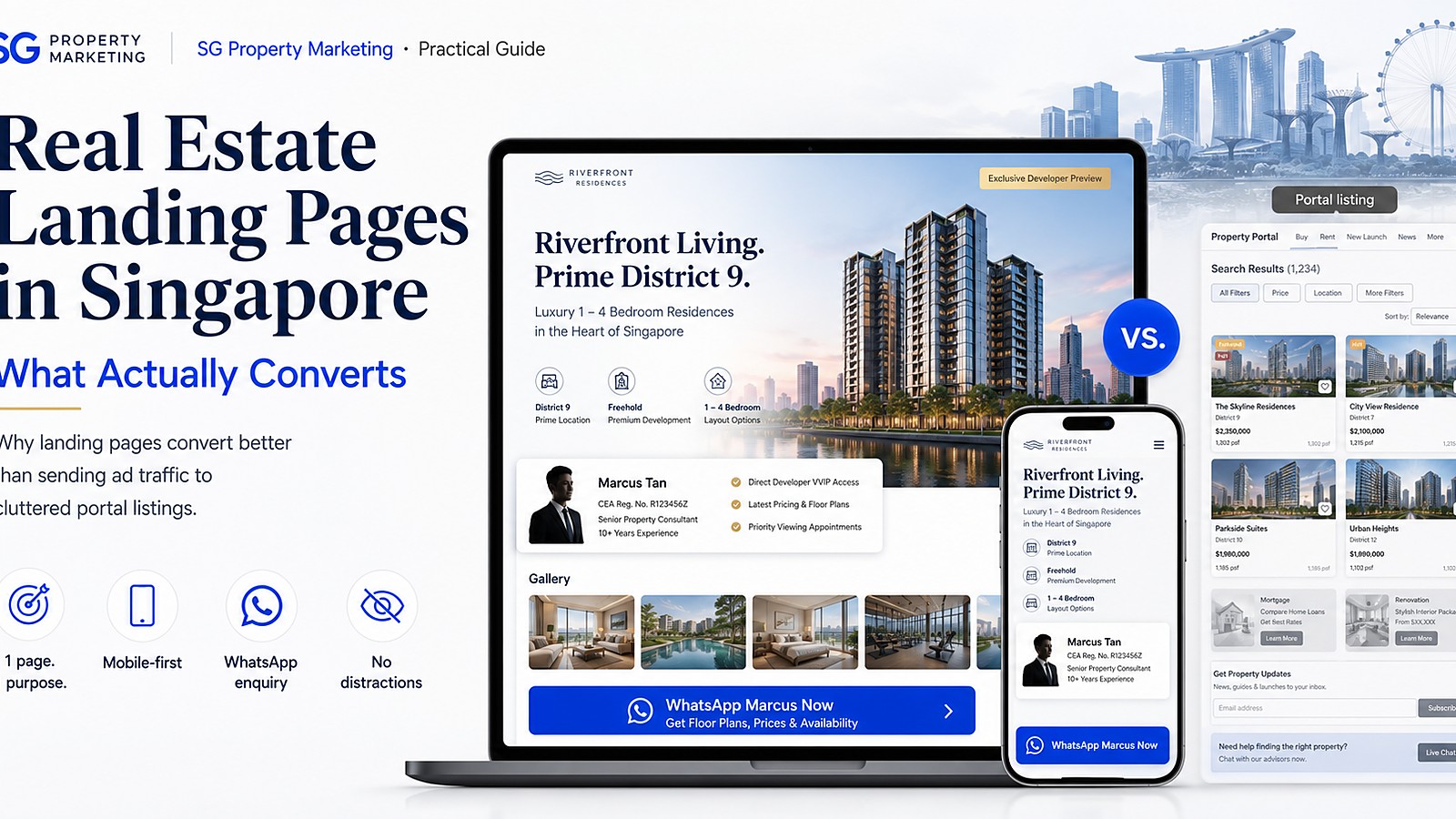
A real estate landing page is a single, focused page built for one property or campaign, not a full website. Its only job is converting traffic, from a Google or Meta ad, a WhatsApp broadcast, or a printed flyer QR code, into a viewing enquiry. Done well, it out-converts a portal listing or a generic website page by a wide margin, because it removes every distraction that isn't the one thing you want the visitor to do.
Search "real estate landing pages Singapore" and you'll find dozens of agencies offering one as a line item. What's rarely explained is why a landing page exists as a category at all, separate from a website, and what actually needs to be on it to justify the cost.
01 What a real estate landing page actually is
A landing page is a single page with one purpose: convert the specific traffic sent to it. Unlike a website, it has no navigation menu to click away to, no unrelated listings competing for attention, and usually no other pages behind it at all. Every element on it, the headline, the images, the trust signals, the form or WhatsApp button, exists to move one visitor toward one action.
This matters because the traffic you send to a landing page has already shown intent, someone clicked a Google ad for "new launch Tampines" or tapped a link from your Meta ad. A landing page's job is to not waste that intent by giving the visitor ten other things to look at instead.
02 Why Singapore property agents specifically need one
Two things make Singapore's property market unusual, and both point toward landing pages. First, thousands of registered agents compete for the same buyer attention on the same portals, PropertyGuru, 99.co, and EdgeProp all show listings side by side, so a shared portal page has no way to distinguish you from the agent next to your listing. Second, most buyer research now happens on mobile, often at night, which rewards pages built to load fast and convert in seconds, not full sites designed to be browsed at leisure.
A landing page solves both. It gives your paid traffic a page you fully control, with no competing agents' listings on it, and it can be built lean and mobile-first specifically for the campaign it supports.
The portal problem
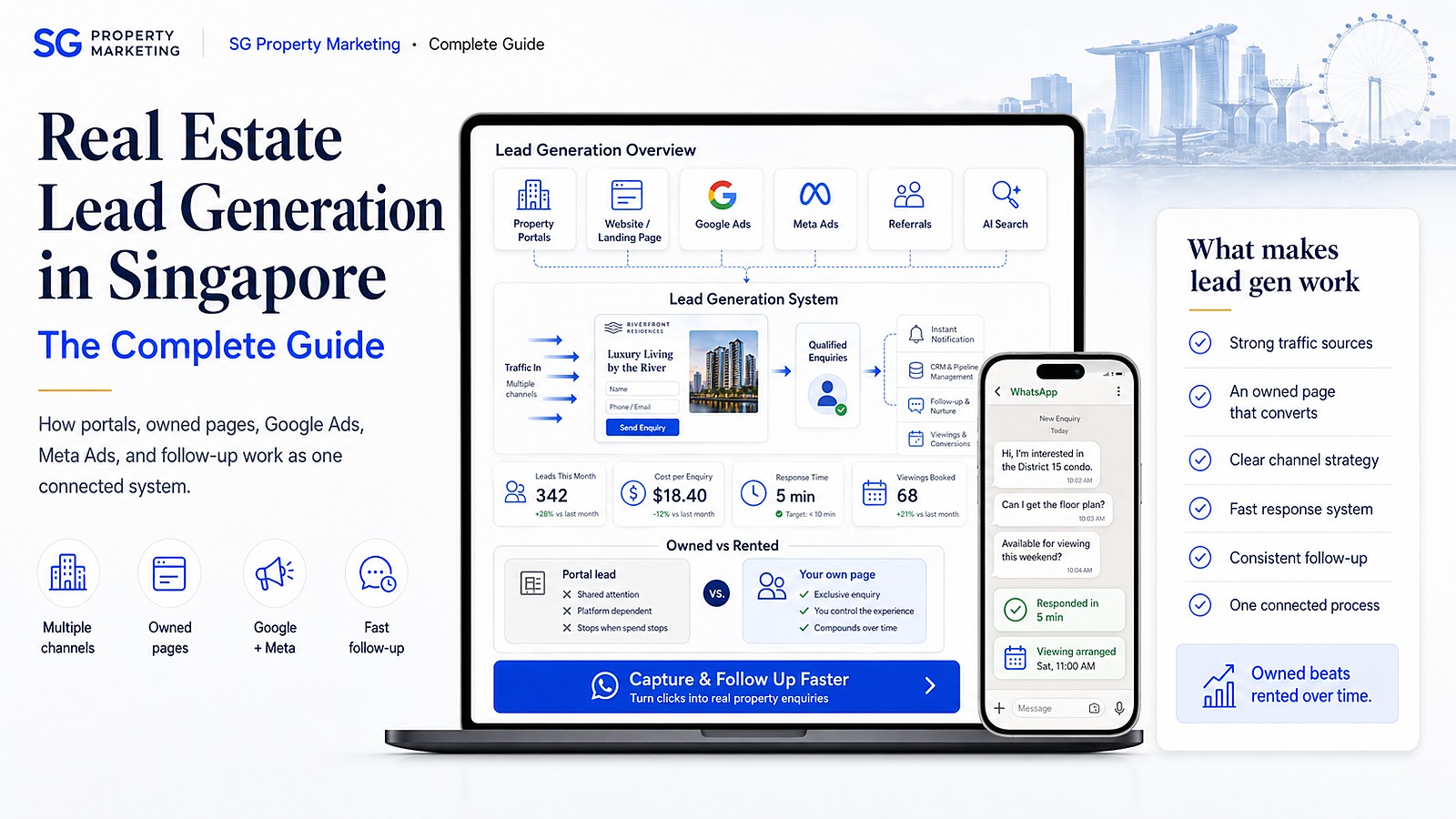
Send Google or Meta ad clicks to your listing on a property portal and you're paying to send a warm, ready-to-enquire buyer straight to a page where five other agents' listings for similar units sit one scroll away. A landing page you own removes that leak entirely.
03 The core elements a real estate landing page needs
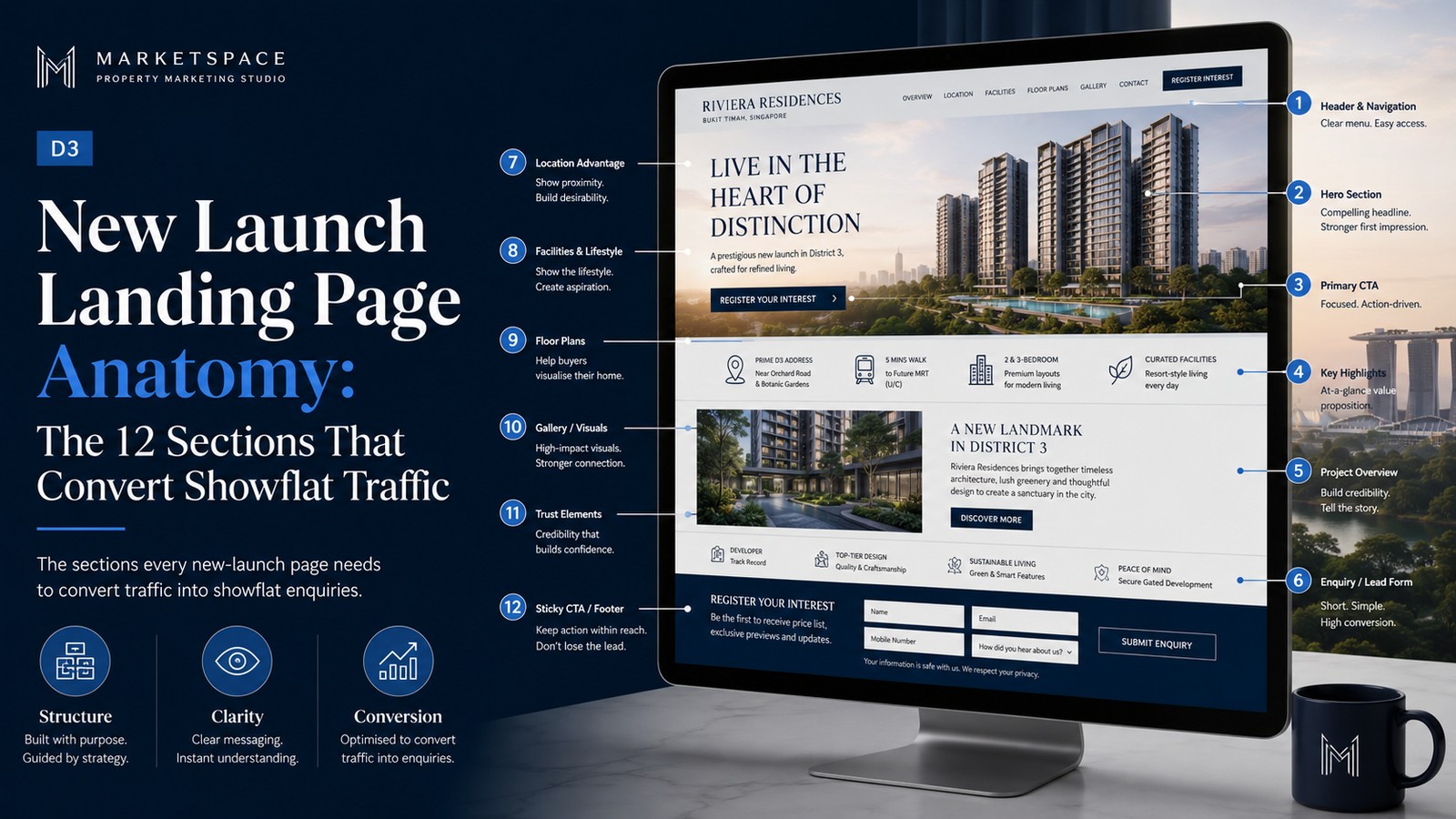
At minimum, a working landing page needs: a clear headline stating what the page is about, a strong hero image, basic trust signals (your name, photo, CEA registration), the key property or offer facts, a gallery or supporting visuals, and one clear, low-friction call to action, usually a WhatsApp tap rather than a long form.
We go through the complete structure in detail, including the exact order these sections should appear in, in Landing Page Anatomy: The 12 Sections That Convert. If you're about to brief a designer or build one yourself, that's the checklist to work from.
04 Real estate landing page vs a full agent website
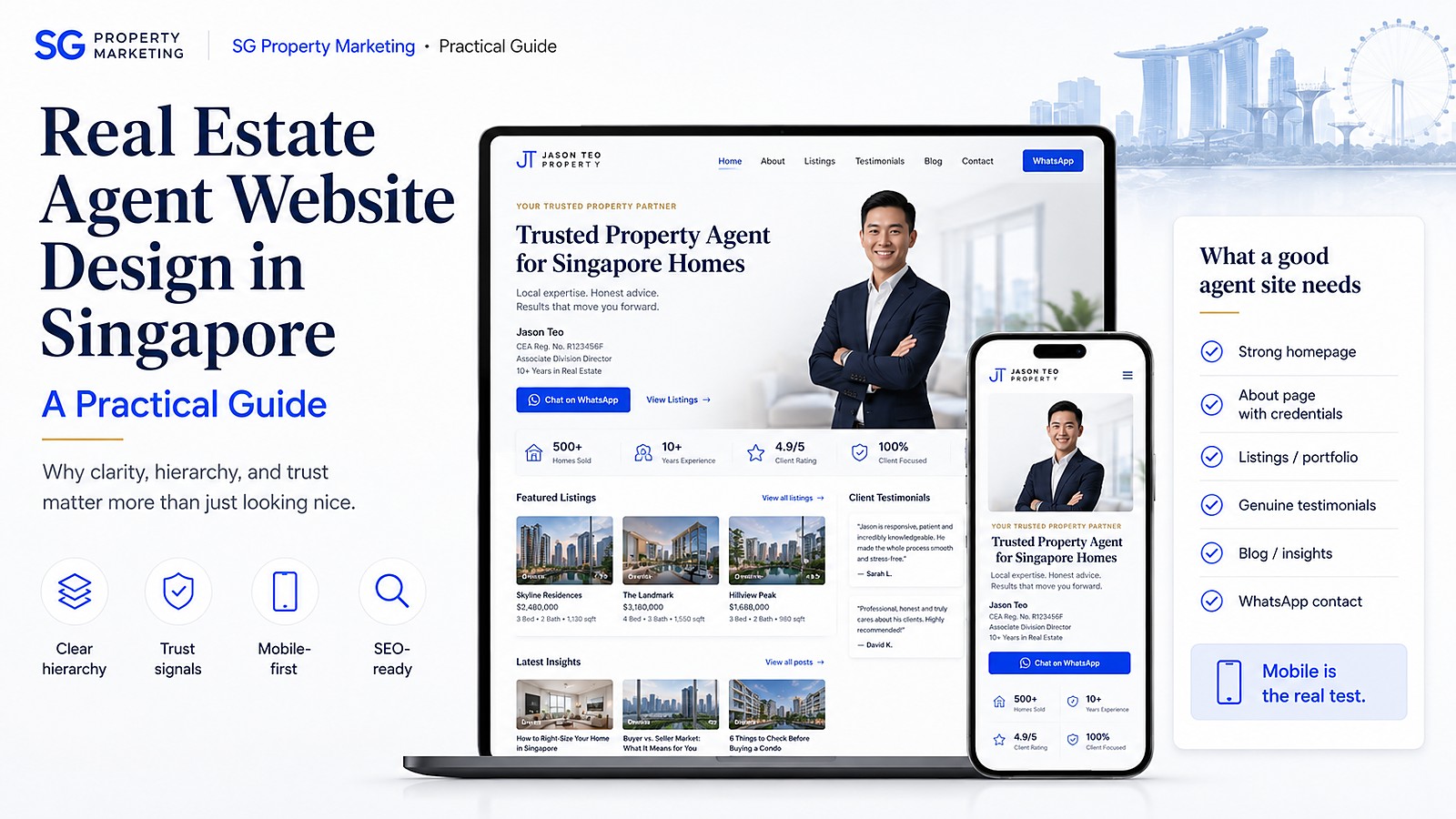
These are not competing choices, they solve different problems. A landing page is campaign-specific and temporary by nature, built around one property or launch and often retired once the campaign ends. A website is permanent, it's what ranks when someone Googles your name, and it needs to hold your full track record, testimonials, and every listing, not just one.
Most agents ask which to build first. The honest answer depends on where your traffic is coming from right now. If you're already running or planning paid ads for a specific listing or launch, start with the landing page, it pays for itself faster. If people are already searching your name and finding nothing solid, start with the website. We've laid out the full decision framework in Landing Page or Full Website: What You Actually Need First.
05 What it costs and how long it takes
Pricing for real estate landing pages in Singapore varies widely between agencies, from cheap template-based pages to fully custom, conversion-structured builds with tracking and copywriting included. Rather than anchor on a single number, ask any agency exactly what's included: is copywriting part of it, is mobile optimisation tested on real devices, is conversion tracking (so you know your actual cost per enquiry) set up from day one, and how many rounds of revisions are included. Compare those specifics, not just the headline price.
On timeline, a focused landing page is typically a matter of days, not weeks, since it's one page rather than a full site structure. The biggest variable isn't the build, it's how quickly you can supply property details, images, and any copy direction.
Not sure your current landing page is working?
Send us the link and we'll review it against the 12-section anatomy, tell you what's missing, and what would most likely lift your conversion rate first.
Request a free review →