
Schema markup is a small block of invisible code that tells Google — and increasingly ChatGPT and Gemini — exactly who you are in machine-readable terms: a property agent, in these districts, with this many verified reviews. It takes about ninety minutes to install, costs nothing, and almost no Singapore agent has done it. That gap is the entire opportunity.
Here's a question worth sitting with: when an AI engine reads your website, does it understand that you're a D10 specialist with 38 reviews — or is it guessing from the words on the page? Without schema, it's guessing. With it, you've handed the machine a clean fact sheet. In a world where engines only repeat what they can verify, that's the difference between being cited and being skipped.
This guide covers what schema is, why it matters more in 2026 than it ever did for SEO, the four types every agent needs, a copy-paste example, and how to install and test it without a developer.
01 What schema markup actually is
Your web page shows a human a name, a photo and some paragraphs. A machine sees a soup of text and has to infer meaning. Schema markup — written in a format called JSON-LD and pasted into your page — removes the guesswork by labelling your facts explicitly: this is the agent's name, this is the area served, this is the rating. It's the vocabulary search engines and AI models were built to read.
It's invisible to visitors and lives quietly in your page's code. But to a crawler or a generative engine, it's the cleanest possible signal of who you are and what you can be cited for.
02 Why it matters more in 2026
For years schema was a "nice to have" that earned the occasional rich result in Google. The rise of generative engines changed the stakes. AI models reward content they can parse with confidence, and structured data is the highest-confidence input there is. When the engine can read your specialty and credentials as labelled facts rather than prose, you become a safer source to name.
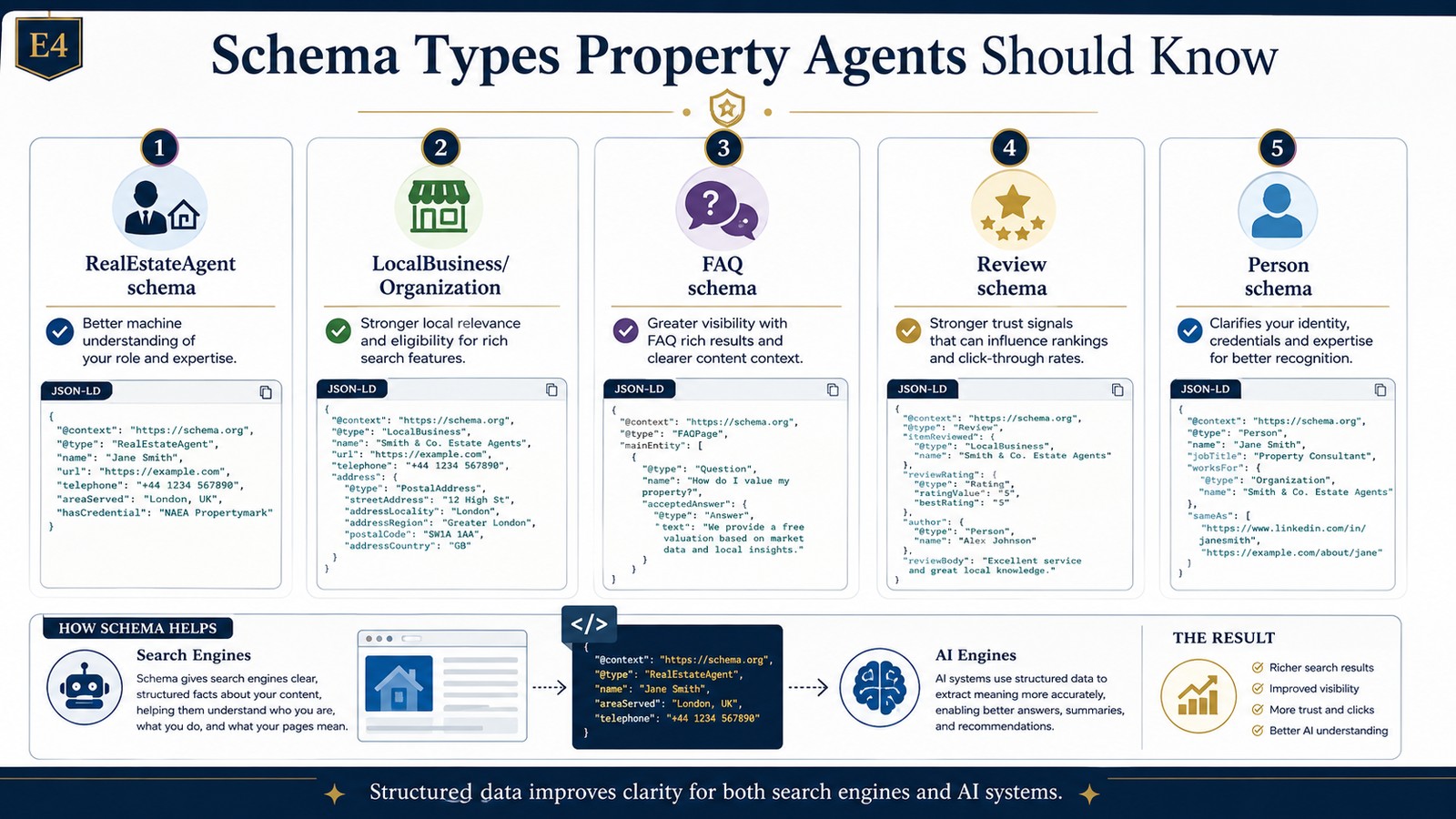
Why agents skip it (and shouldn't)
Schema feels technical, so most agents never touch it — which is precisely why installing it is such an easy edge. It's one of the few GEO moves that is fast, free, fully in your control, and almost universally neglected by the other 37,000 agents.
03 The four schema types every SG agent needs
RealEstateAgent(orPerson). Your identity: name, photo, URL, phone, area served, what you specialise in, and your agency with CEA registration. This is the core entity an engine ties everything else to.FAQPage. Marks up your buyer FAQs so engines recognise them as structured questions and answers — the format AI engines lift most readily.Review/AggregateRating. Your genuine client reviews and average rating, made machine-readable. Powerful for trust — but it must reflect real, verifiable reviews (more on that below).BreadcrumbList. The small navigational schema that helps engines understand your site structure and how your pages relate. Quick to add and worth it.
04 A copy-paste starting point
Here is a stripped-down RealEstateAgent block. Replace the placeholder values with your real, verifiable details and paste it into the <head> of your page (or via Google Tag Manager). Never invent numbers — engines and Google cross-check them.
For your FAQs, wrap each question and answer in FAQPage schema; for navigation, add BreadcrumbList. A single page can carry several schema blocks at once — they don't conflict.
05 How to install and test it
- Install by pasting the JSON-LD into your page's
<head>, or fire it through Google Tag Manager if you'd rather not touch the template. - Validate with Google's Rich Results Test and the Schema.org validator — both are free and flag errors instantly.
- Confirm coverage in Google Search Console, which reports detected structured data and any issues across your site.
The one mistake that backfires
Never fake reviews or ratings in AggregateRating. Google penalises invented review markup, and it erodes exactly the trust signal you're trying to build. If you have eight genuine reviews, mark up eight — not eighty.
Schema is the technical floor of GEO. Stand it up, then build on top: the full strategy lives in what GEO is and why SG agents need it, and the practical citation playbook is how to get cited by ChatGPT, Gemini and Perplexity.
Free AI visibility audit for your name
Not sure whether your site has any schema — or whether it's correct? We'll audit your structured data and your AI visibility together, and send a short video showing what's missing and what to fix first.
Request a free AI audit →